

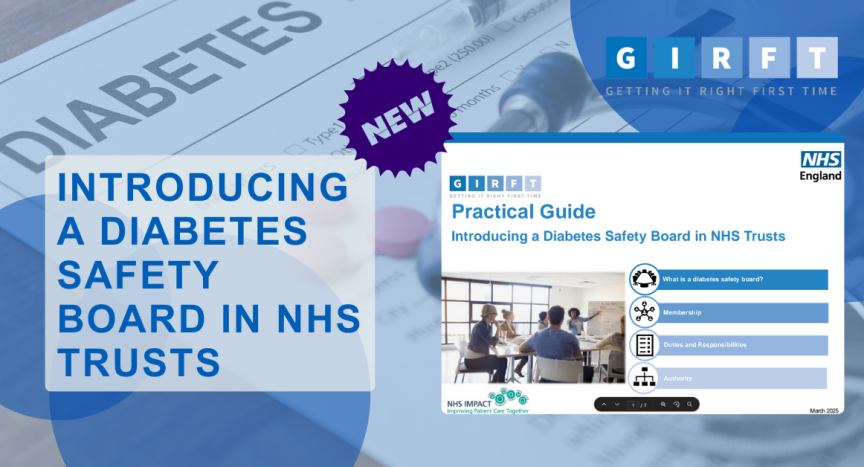
GIRFT has produced a guide to support clinical teams in establishing diabetes safety boards.
This follows a recommendation in GIRFT’s national specialty report on diabetes, published in November 2020, which advised that a trust-level diabetes safety board attended by multidisciplinary clinical teams would reduce complications for inpatients with diabetes.
Diabetic ketoacidosis (DKA), foot ulceration and amputation, sight loss, stroke and heart disease are all potential complications of poorly managed diabetes. The GIRFT national review found evidence that many of these outcomes could be prevented with improved coordination and condition management in hospital.
The guide is aimed at a range of staff working with people with diabetes in hospital, including diabetes clinical leads, diabetes specialist nursing teams, operational leads, diabetes service managers and quality and safety teams.
The purpose of the diabetes safety board is to support safe inpatient diabetes care by:
- Ensuring improvement initiatives are in place to mitigate identified risks
- Supporting the safe use of insulin and helping people with self-management where appropriate
- Embedding a strong culture of governance in relation to caring for people with diabetes
- Promoting education and training for staff who handle, prescribe and administer insulin.
In addition to providing practical steps on setting up and running a diabetes safety board, the guide signposts to useful resources available on the GIRFT website and FutureNHS platform.
The new guide can be viewed and downloaded from the FutureNHS GIRFT workspace under GIRFT/Diabetes/Trust resources.


